Key takeaways
- Muscle does not require a commercial gym; it requires a challenging resistance stimulus that can progress over time.
- Limited equipment makes exercise selection and progression more important, not impossible.
- Harder variations, more repetitions and better control can make simple movements progressively demanding.
- Recovery and adequate food still matter even when training at home.
Yes. Bodyweight, bands and a small amount of weight can build muscle when exercises are challenging enough and progressed over time. The key is a useful resistance stimulus, not expensive equipment.
A crowded home gym is not the price of entry for muscle building. The body responds to resistance, not to the shape or brand of the equipment. What matters is whether a movement becomes challenging enough, whether you can repeat it consistently and whether the challenge increases as you adapt.
Use the equipment you actually have
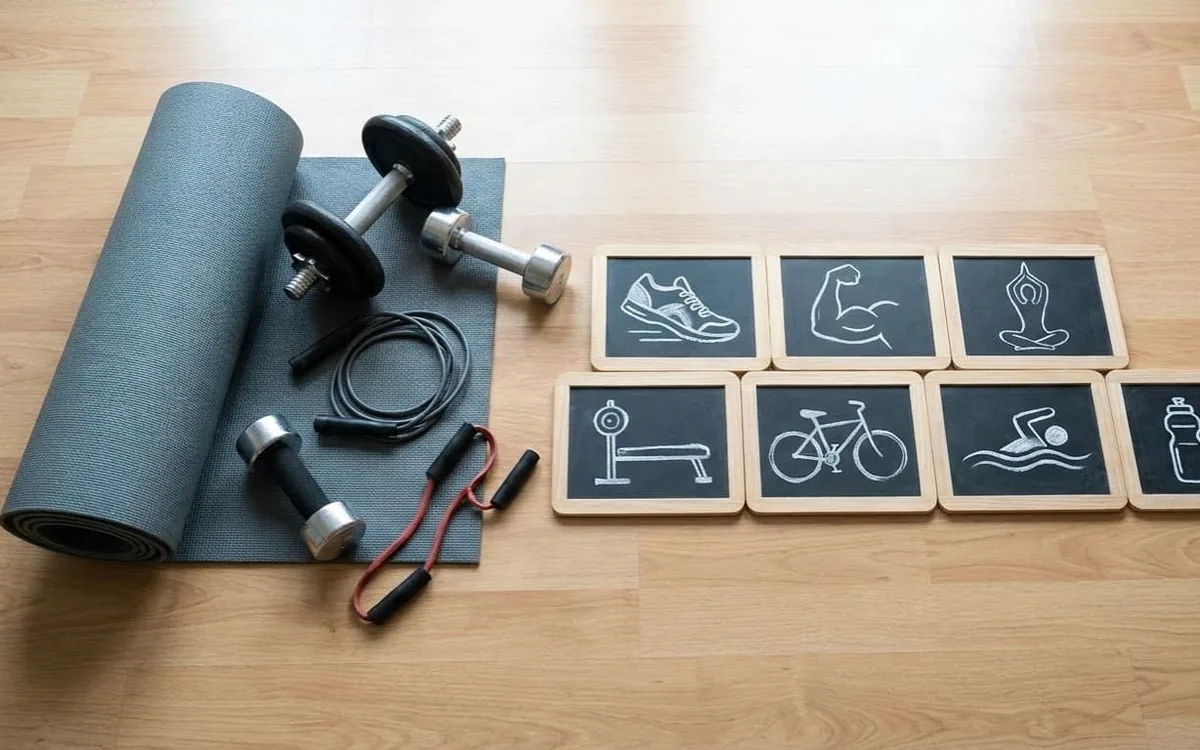
A resistance band, adjustable dumbbell pair or even a stable household setup can expand the number of movements available. Before buying more gear, build a routine around what you can control and progress.
| Movement pattern | Minimal-equipment options | How to progress |
|---|---|---|
| Squat | Split squat, goblet squat, tempo squat | More reps, deeper range or more load |
| Hinge | Glute bridge, backpack hinge, Romanian deadlift | More load or slower tempo |
| Push | Incline push-up, floor push-up, dumbbell press | Lower the incline, add reps or load |
| Pull | Band row, one-arm row, supported row | More resistance, reps or control |
| Core | Plank, dead bug, side plank | Longer hold or harder variation |
Make bodyweight movements harder without adding plates
Progression can come from leverage and control. A normal squat can become a split squat, a push-up can move from an elevated surface to the floor, and a plank can become a harder unilateral variation. Slower lowering phases can also make a familiar movement much more demanding.
Use a repeatable rep range
Choose a range that lets you maintain good form. Once you consistently reach the upper end, make the exercise a little harder. This gives you a clear path forward even when your equipment is limited.
Do not confuse novelty with progression
Changing exercises every workout can feel productive because every movement is new. But novelty makes it harder to measure improvement. Pick a small set of movements and keep them long enough to learn, repeat and progress them.
How often should you train each muscle?
You can distribute your weekly work across two or three full-body sessions or use an upper/lower split if your schedule supports more days. Choose the option that allows you to train consistently and recover before the next hard session.
Food and recovery still count
Muscle-building is not created by workouts alone. Adequate protein, enough overall food for your goal and regular sleep support the process. You do not need a complicated supplement routine to start.
A simple three-day home structure
- Day 1: squat variation, push-up variation, row variation, core.
- Day 2: hinge variation, split squat, overhead or incline press, row variation.
- Day 3: repeat the strongest variations and progress one or two movements.
When limited equipment becomes the limiting factor
Eventually you may become strong enough that a movement no longer feels challenging in your available rep range. That is not a problem with your discipline. It simply means the current resistance has stopped providing enough overload, and you may need a heavier option or a harder variation.
The goal is progressive resistance, not expensive equipment. Start with the tools you can use safely and build from there.
Frequently asked questions
Can bodyweight training build muscle?
Yes, especially when the movement is challenging and progressed over time. Beginners can make substantial gains from basic resistance training.
How many exercises do I need?
A small set of well-chosen movements can cover the major patterns. More exercises are useful only when they add a clear purpose.
When should I buy more equipment?
When your current setup no longer lets you create enough resistance for the movements you want to progress, or when new equipment would make training substantially easier to organize.
Who this is for
Generally healthy adults looking for practical, evidence-informed guidance on this topic.
Who should be cautious
Anyone with a relevant injury, chronic condition, or who is pregnant should check with a qualified healthcare provider before applying this guidance.