Key takeaways
- A warm-up should raise your heart rate and rehearse the movements you are about to do.
- Dynamic stretching before training, static stretching after, is a reasonable default.
- Five to eight minutes is usually enough for a warm-up before most workouts.
A short warm-up can raise body temperature, rehearse movement and prepare you for the session ahead. Dynamic movement is a sensible default before demanding or explosive training, while static stretching is useful when flexibility is the goal. Current guidance does not justify a blanket claim that warm-ups or stretching prevent all injuries.
Warm-ups are often the first thing cut when time is short. A short warm-up can help raise temperature, rehearse movement and prepare you for the session; current guidance does not support a blanket claim that warm-ups prevent all injuries.
A simple warm-up routine
- 2 minutes of light cardio, such as brisk walking or easy cycling.
- Dynamic movements: leg swings, arm circles, walking lunges.
- A lighter set of your first exercise before working sets, to rehearse the movement pattern.
A simple cool-down routine
- 2–3 minutes of easy walking to bring your heart rate down gradually.
- Static stretches held for 20–30 seconds on the muscles you trained.
- A few slow breaths to shift out of a training mindset before resuming your day.
Dynamic vs. static stretching
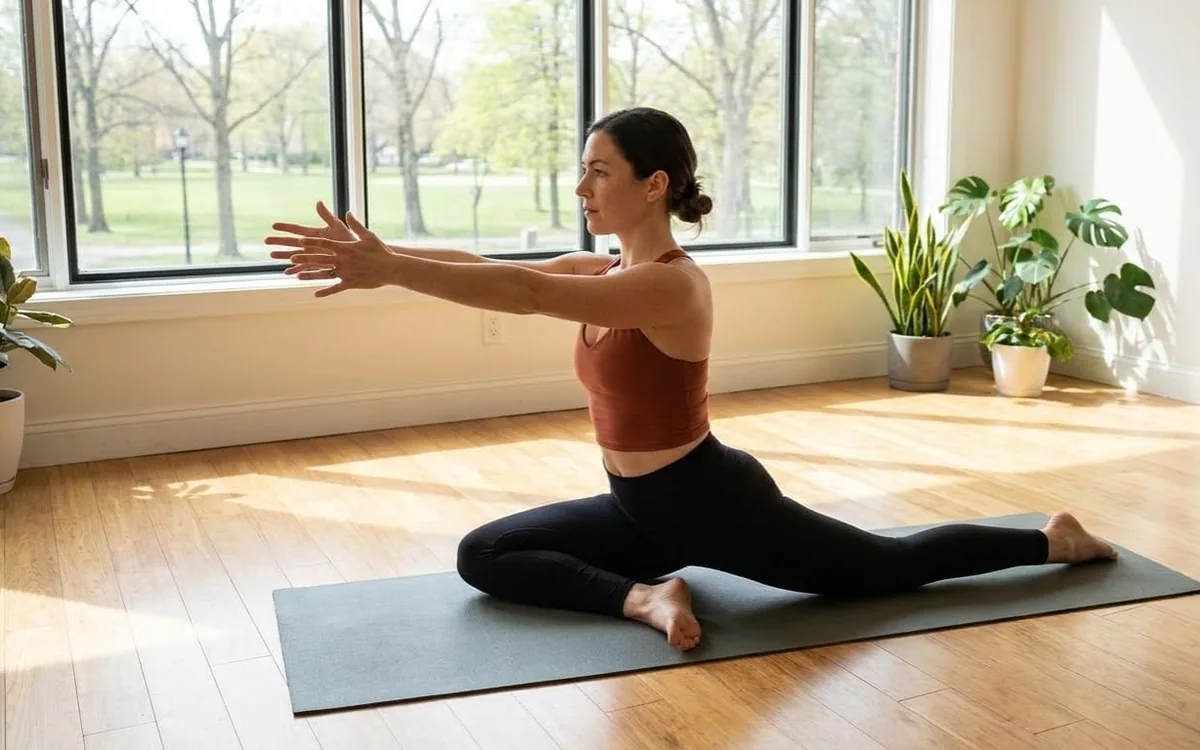
Dynamic stretching (movement-based) before a workout helps prepare muscles without temporarily reducing power output, while static stretching (holding a position) is generally better suited to after a workout, when temporarily reduced power output does not matter.
Frequently asked questions
Can I skip warming up for a short workout?
A brief warm-up can still be useful before a short session, but there is no simple rule that most injuries happen because someone skipped a warm-up.
Is stretching necessary if I feel flexible already?
Even flexible people benefit from a brief warm-up, since flexibility and being physically prepared for a specific workout are not quite the same thing.
Who this is for
Generally healthy adults looking for practical, evidence-informed guidance on this topic.
Who should be cautious
Anyone with a relevant injury, chronic condition, or who is pregnant should check with a qualified healthcare provider before applying this guidance.