Key takeaways
- Three full-body sessions can be enough to build a strong beginner foundation.
- The program prioritizes repeatable movements over endless exercise variety.
- Progress one variable at a time and keep a simple training log.
- Use easier variations whenever technique starts to break down.
A simple three-day full-body program can build a strong beginner foundation. Repeat major movement patterns, use manageable loads and progress gradually rather than changing exercises constantly.
Beginners often collect exercises before they have a plan. A better starting point is to repeat a small number of movements often enough to learn them, build confidence and see measurable progress. This three-day program uses the squat, hinge, push, pull and core patterns as its foundation.
The weekly schedule
| Day | Session | Main work |
|---|---|---|
| Monday | Workout A | Squat, push, row, hinge, core |
| Wednesday | Workout B | Split squat, press, pulldown/row, bridge, core |
| Friday or Saturday | Workout A/B alternating | Repeat the session that comes next in the cycle |
Workout A
| Exercise | Sets | Reps |
|---|---|---|
| Bodyweight or goblet squat | 2–3 | 8–12 |
| Push-up or dumbbell press | 2–3 | 8–12 |
| Row variation | 2–3 | 8–12 |
| Romanian deadlift or glute bridge | 2–3 | 8–12 |
| Plank | 2 | 20–45 sec |
Workout B
| Exercise | Sets | Reps |
|---|---|---|
| Split squat or step-up | 2–3 | 8–10 per side |
| Overhead or incline press | 2–3 | 8–12 |
| Pulldown or row | 2–3 | 8–12 |
| Glute bridge or hinge | 2–3 | 10–15 |
| Bird dog | 2 | 6–10 per side |
How hard should the sets be?
Start with a load that allows you to complete the planned repetitions while keeping the movement controlled. The last few repetitions should require effort, but the exercise should still look like the same exercise you started with.
How to progress
Stay within the listed rep range. When you can reach the top end for all planned sets with stable technique, add a small amount of resistance or move to a slightly harder variation. Then build the repetitions again.
What to do when a movement feels wrong
Use an easier variation, reduce the range, lower the load or ask a qualified professional to review the movement. There is no training prize for forcing an exercise that does not suit you.
How long should the workouts take?
Most beginners can complete the main work in roughly 30–50 minutes depending on rest and setup. Longer is not automatically better.
The first six weeks
- Weeks 1–2: learn technique and choose conservative loads.
- Weeks 3–4: add repetitions where you can.
- Weeks 5–6: progress one or two movements gradually while keeping the rest stable.
Where cardio fits
Easy walking, cycling or other moderate activity can be added on non-lifting days. Keep harder cardio away from the sessions where it would noticeably reduce strength-training quality.
This is a general educational template, not a personalized prescription. Adults with injuries, chronic conditions, pregnancy or other special considerations may need an individually adapted plan.
Equipment and substitutions
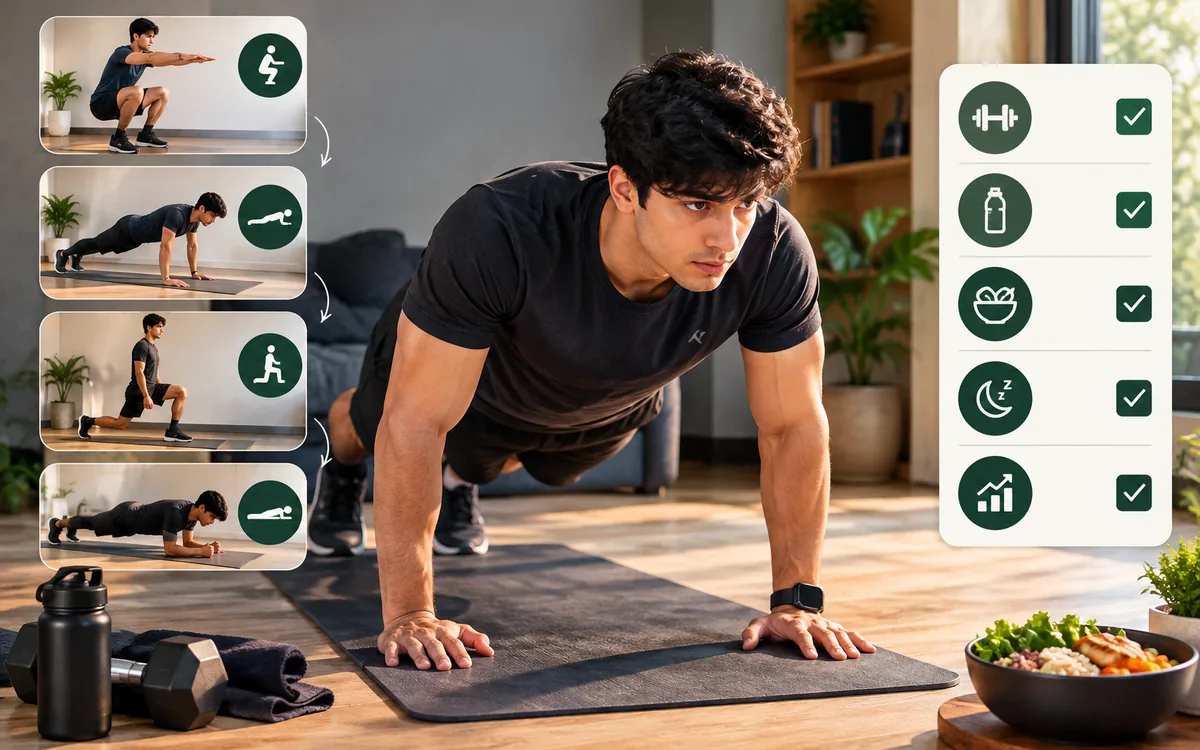
You can do this program at home with suitable substitutions. Bodyweight, resistance bands or dumbbells can cover many of the movements.
Frequently asked questions
Can I train three days in a row?
You can, but beginners often find it easier to recover when full-body sessions are separated by at least one easier day.
What if I can only train twice a week?
Alternate Workout A and Workout B across the weeks. Two consistent sessions are still useful.
When should I change the program?
Keep the structure while it is working and while you can still progress. Change individual movements when needed before replacing everything at once.
Who this is for
Generally healthy adults looking for practical, evidence-informed guidance on this topic.
Who should be cautious
Anyone with a relevant injury, chronic condition, or who is pregnant should check with a qualified healthcare provider before applying this guidance.