Key takeaways
- Progress is broader than body weight and can include strength, endurance, consistency and movement quality.
- One measurement is easier to interpret when paired with several others.
- Trend data is usually more useful than a single day or workout.
- Tracking should help you make decisions, not make you anxious about every fluctuation.
Useful tracking can include strength, endurance, consistency, mobility and longer-term body trends. Choose only the measures that help you make better training decisions.
Tracking can be useful because memory is imperfect. You may feel like you have not improved, only to discover that your push-ups increased, your walking pace is easier or you have missed fewer workouts. The key is choosing a small number of measures that actually help you decide what to do next.
Track the training itself
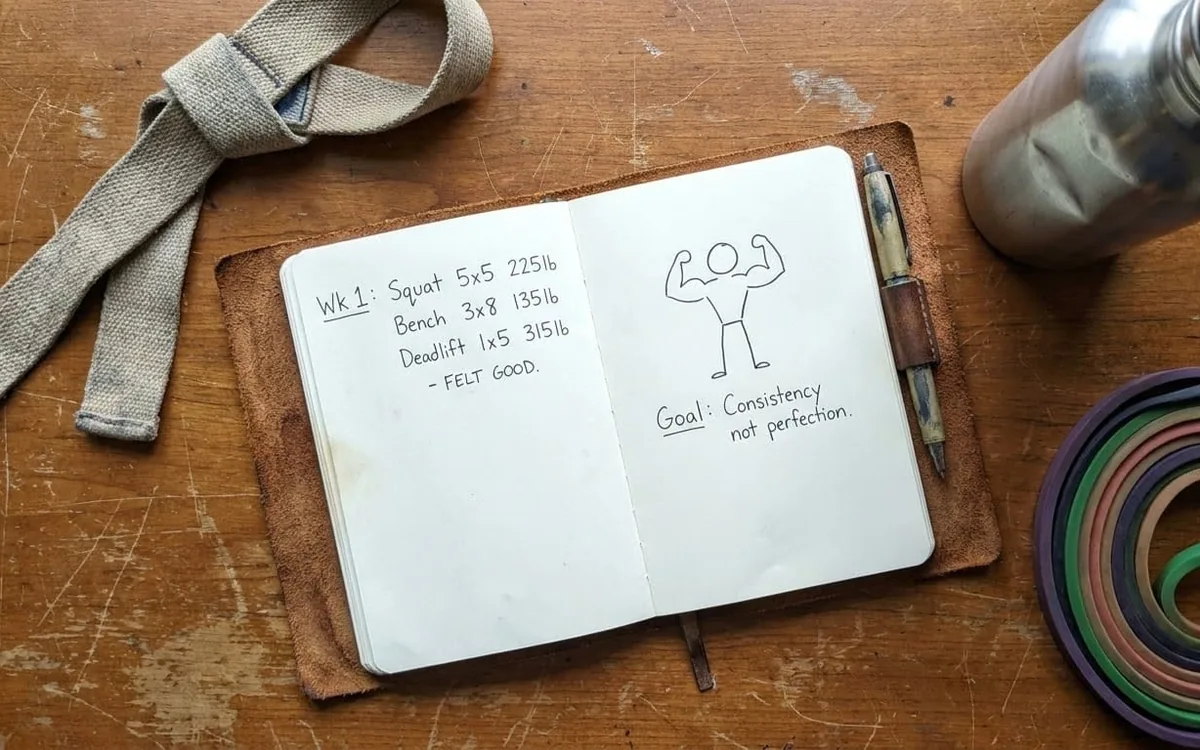
- Exercise performed.
- Sets and repetitions.
- Load or resistance when applicable.
- Session duration for cardio.
- A quick note about how difficult the session felt.
Track habits that make progress possible
A perfect spreadsheet cannot make up for missed sessions. It can be more useful to track whether you completed the routine, slept reasonably, walked regularly and ate in a way that supported your goals.
Measure more than appearance
| Measure | What it can tell you |
|---|---|
| Strength | Whether resistance work is progressing |
| Endurance | Whether you can sustain activity more comfortably |
| Mobility | Whether a movement is becoming easier or more controlled |
| Consistency | Whether the routine is actually happening |
| Body measurements | A longer-term body-composition trend when appropriate |
Why daily body weight can be noisy
Water, food volume, sodium, carbohydrate stores and other factors can change the scale quickly. That is why a single weigh-in can be emotionally loud but informationally weak. Trends over several weeks provide more context.
Use simple checkpoints
Every four to six weeks, review your log. Which movements improved? Which sessions were repeatedly skipped? What felt easy? What felt unnecessarily hard? That review turns tracking into programming information instead of a collection of numbers.
Do not track things you never use
If a metric never changes a decision, it may not deserve a place in your system. Many people need a notebook or phone note, not a dozen dashboards.
Watch for all-or-nothing thinking
A missed workout, a heavier scale reading or a slower run does not erase previous progress. Use the data to adjust the next action rather than create a story about failure.
A five-minute weekly review
- What did I complete?
- What improved?
- What felt harder than expected?
- What should I keep the same next week?
- What is one small change worth testing?
Tracking works best when it makes training clearer. If measurement increases stress without improving decisions, simplify it.
Frequently asked questions
Should I weigh myself every day?
You do not have to. Some people find daily data useful for trends, while others prefer less frequent measurements.
What is the best progress metric?
There is no single best one. A combination of training performance, consistency and goal-specific measures is usually more informative.
Can I track progress without a smartwatch?
Absolutely. A notebook or phone note can capture most of what matters for strength and general fitness.
Who this is for
Generally healthy adults looking for practical, evidence-informed guidance on this topic.
Who should be cautious
Anyone with a relevant injury, chronic condition, or who is pregnant should check with a qualified healthcare provider before applying this guidance.